HYUNDAI MOTOR COMPANY
Developing a New SUV Concept for China
ROLE
Design Strategist
PROJECT YEAR
2015
TIMELINE
6 Months
OVERVIEW
Forecasting the future buyer and designing for evolving family life
Hyundai Motors wanted to enter China’s SUV market with a new product concept rooted in consumer values and future marketability. While demand for SUVs was growing, the brand faced low market share. The goal of this project was to define who the 2020 Chinese SUV customer truly was and translate that understanding into a clear product and marketing strategy.
CHALLENGE
Designing for a market in motion
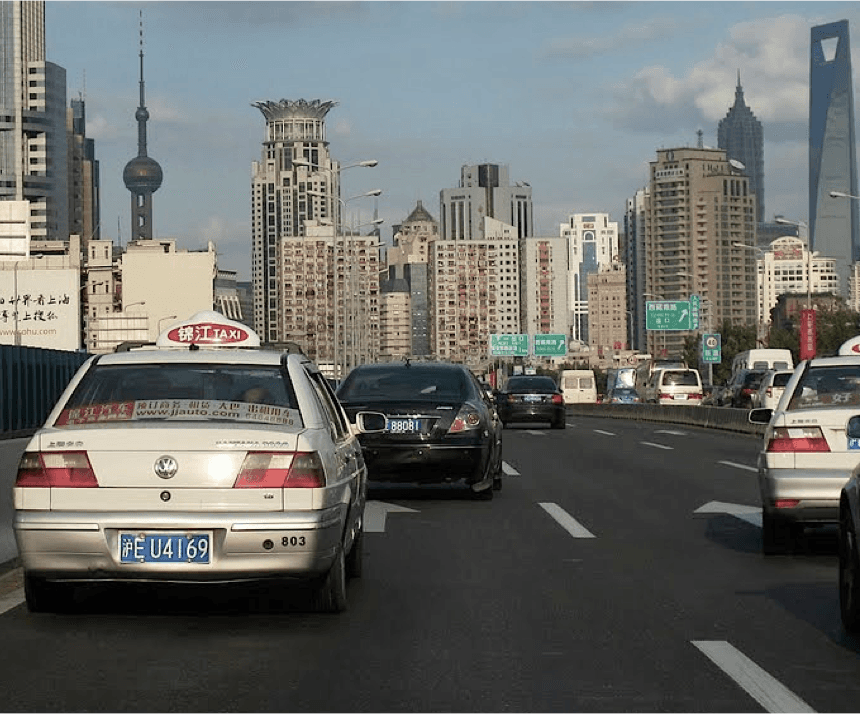
At the outset of this project, China was undergoing rapid transformation driven by sustained economic growth, rising middle-class consumption, and shifting social norms.
💸
Increased purchasing power brought new expectations around mobility.
👶🏼
The end of the one-child policy signaled larger families and evolving space and seating needs.
🧑🧑🧒🧒
Changing family structures led to multi-generational households with working parents and grandparents sharing caregiving roles.
The challenge wasn’t simply designing a bigger SUV; it was understanding how these shifts in lifestyle, values, and expectations should shape the vehicle itself and how Hyundai could build relevance and brand equity in a fast-changing market.
DISCOVERY
From trend reports to driving seats
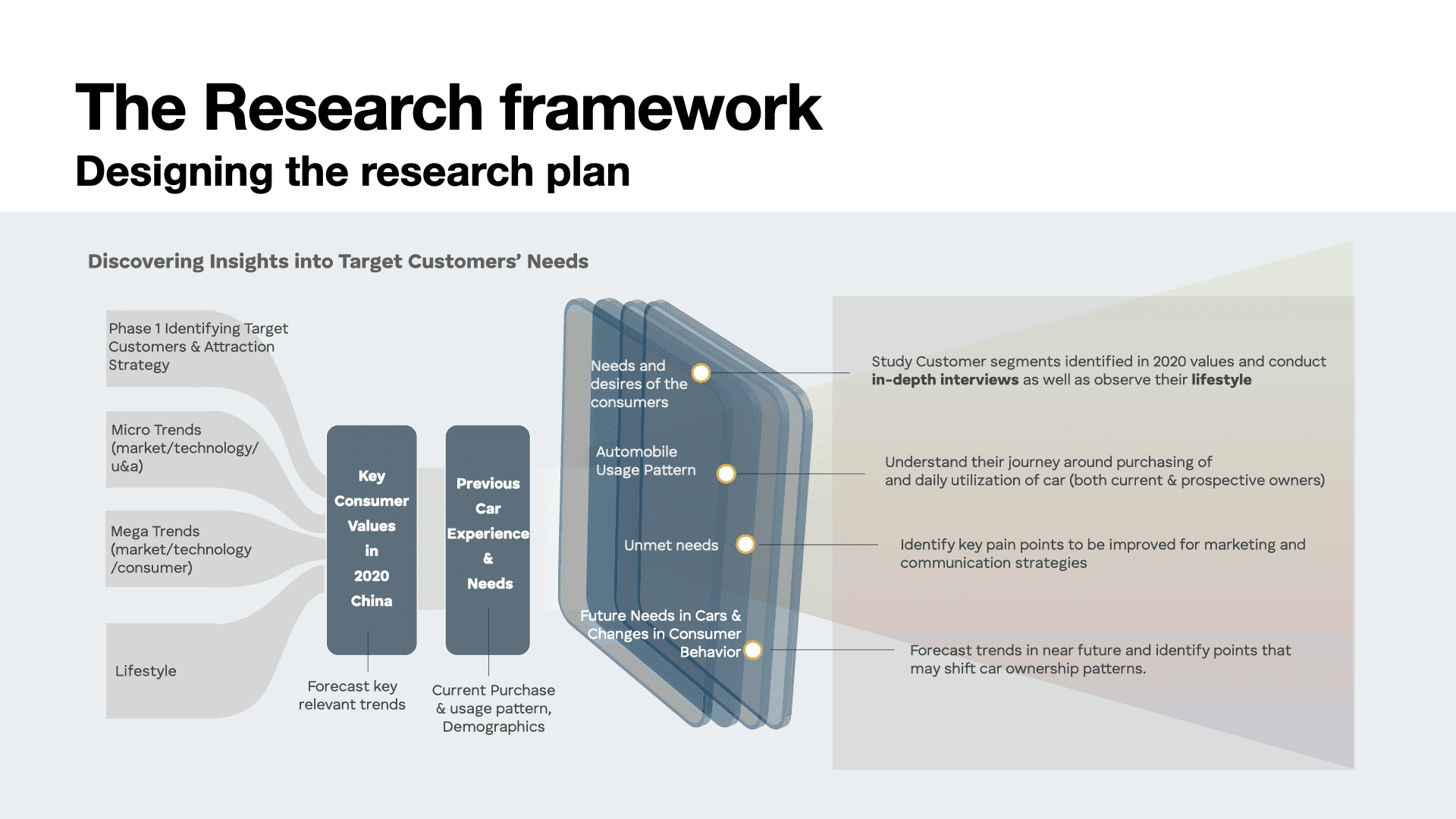
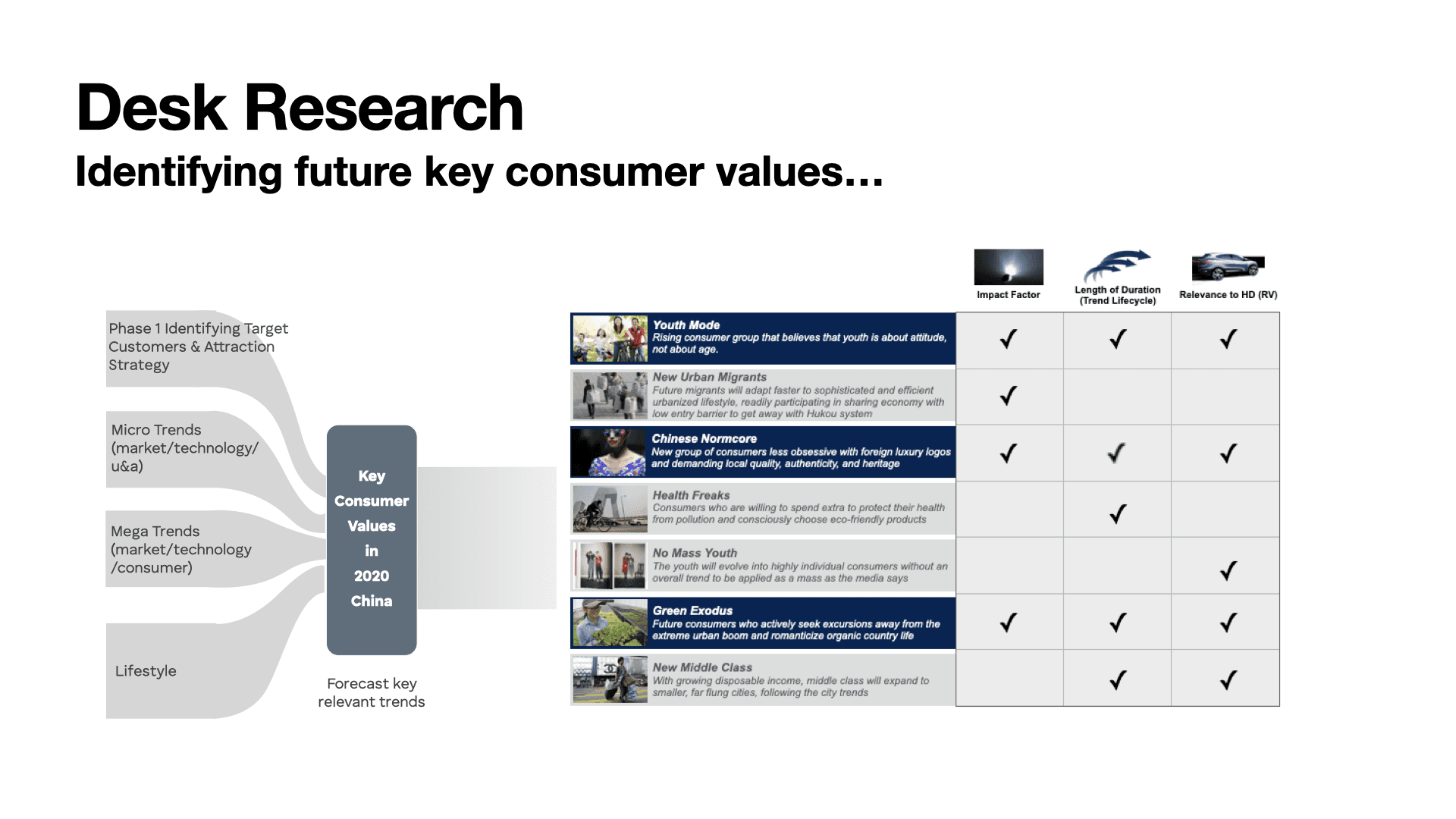
As a team lead, I designed and led a multi-layered research approach to ground the concept in both cultural context and lived experience. We began with lifestyle and trend research, distilling insights from trend reports, academic literature, and the client’s internal market and segmentation data to understand macro shifts shaping China in 2020. This was followed by ethnographic research, including in-depth interviews, home visits, and drive-alongs to observe how vehicles fit into everyday family life.
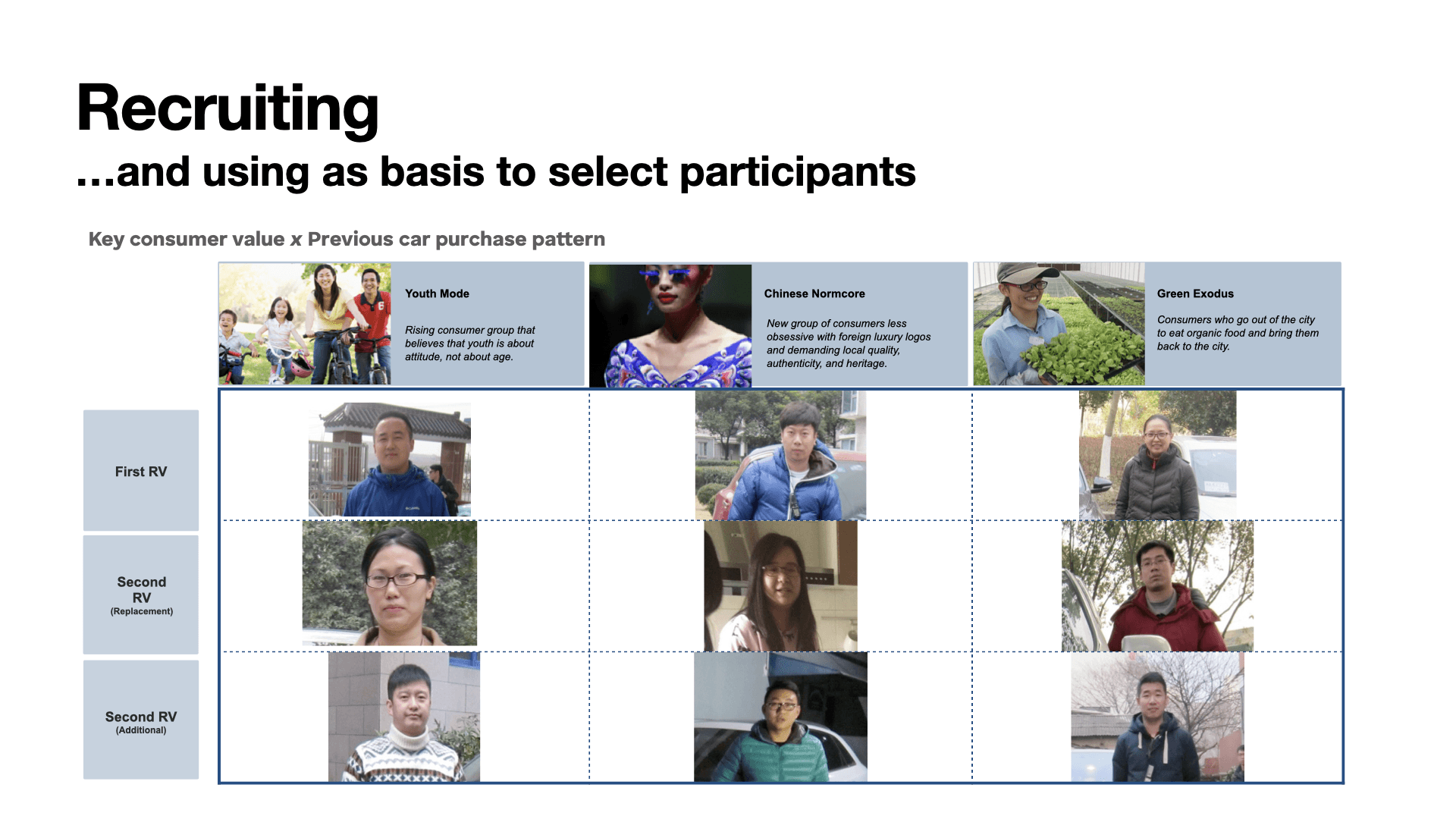
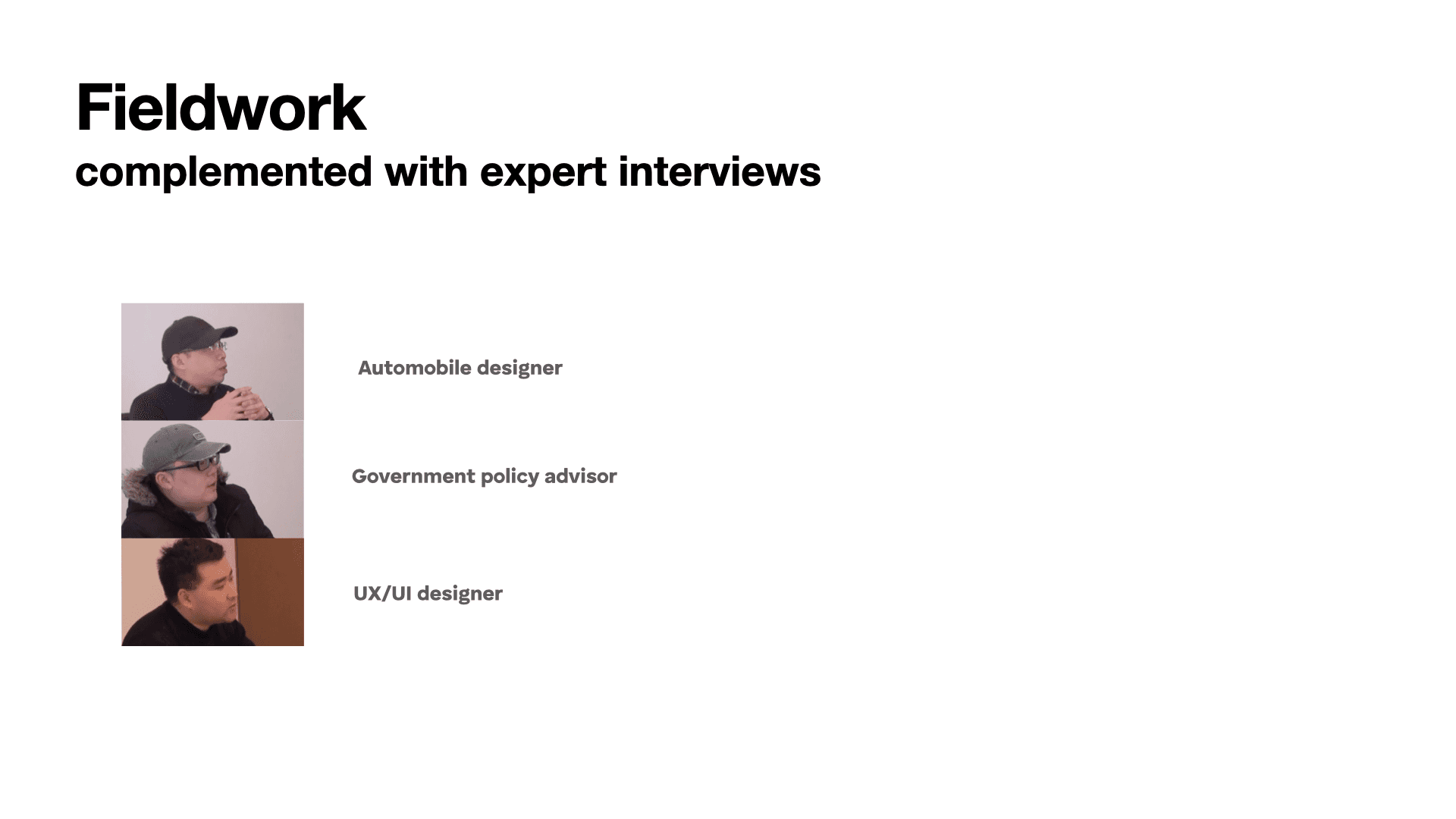
To pressure-test and enrich these findings, I conducted expert interviews with an automobile designer, a Chinese policy advisor, and a UX/UI designer, bringing together perspectives from design, regulation, and emerging in-vehicle experiences. The policy advisor clarified that multi-generational caregiving was shifting faster than demographic data suggested.

Field work included in-home visit with a Shanghai family, observing how the car fits into daily caregiving routines between parents and grandparents.
ANALYSIS
Lifestyle over features
Across research, a consistent theme emerged: Chinese SUV buyers were investing in a vehicle that could support complex, multi-role family lives while signaling upward mobility. Space, seating, and flexibility mattered, but so did comfort, status, and a sense of modernity. This pushed our team further to shift away from “what features should an SUV have?” to what kind of lifestyle should this SUV confidently support?

Instead of optimizing for cargo space and seating configurations, we designed around the emotional experience of a multi-generational family arriving somewhere together.
DEVELOPMENT
Translating insight into action
To translate insight into action, I designed and facilitated a Design Thinking workshop with cross-functional client teams—including PMs, designers, marketing, and engineers. The goal was to create shared understanding and collective ownership of the strategy. Using tools such as personas, journey maps, and early concept exploration, we aligned on target consumers, key tensions, and opportunity areas. This process ensured that product decisions were anchored in real consumer needs rather than assumptions or legacy thinking.
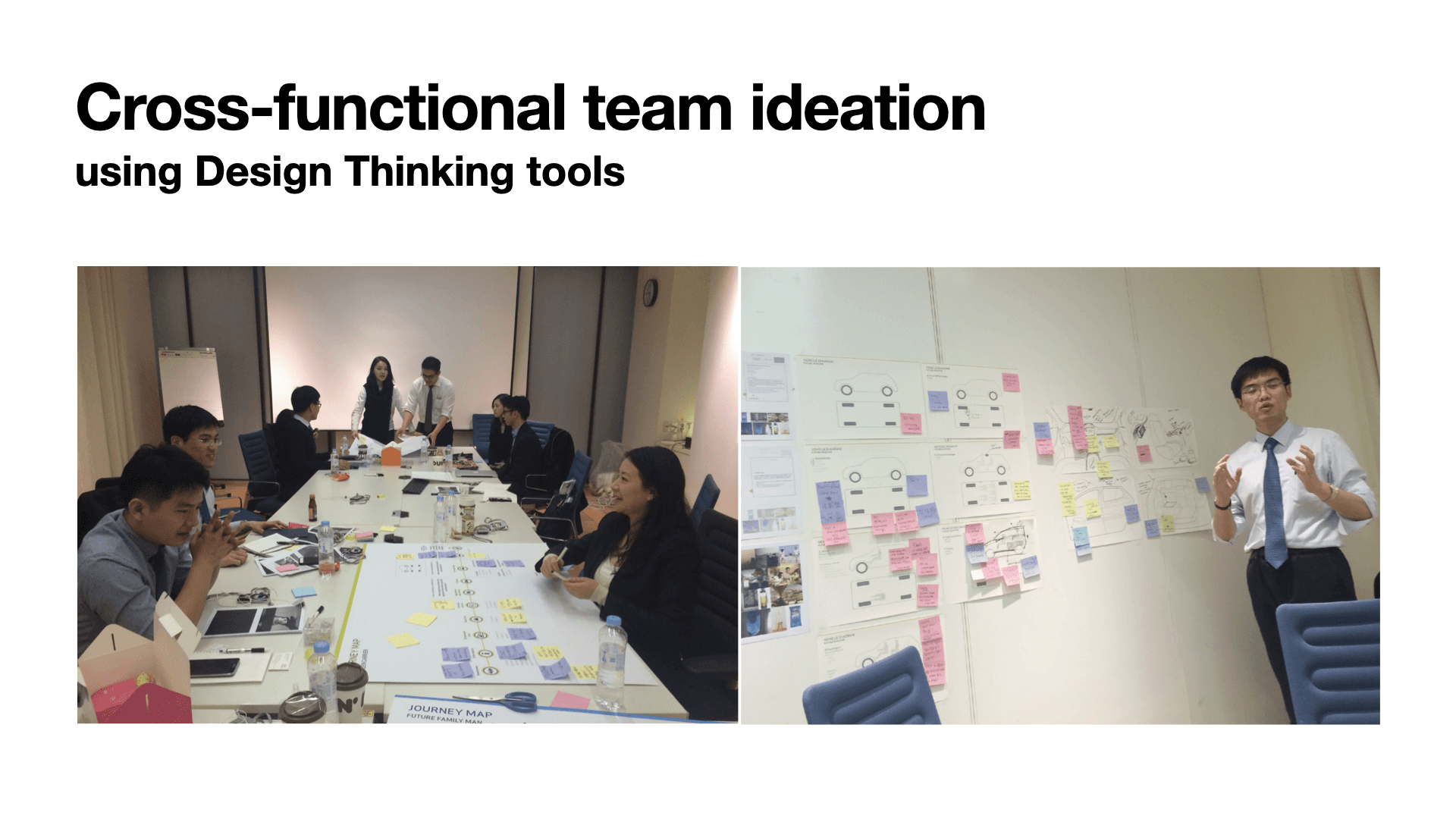
Workshop output: three target consumer personas aligned across Hyundai's product, marketing, and engineering teams.
Product concepts grounded in insight
The final deliverables defined a clear target consumer and presented three distinct SUV concepts, each with interior and exterior sketches and a set of key features tied directly back to research insights. Each concept conveyed a different value proposition tailored to Chinese consumers’ lifestyles and expectations. The concepts were presented to Hyundai's executive design team and informed their China market strategy for 2020.
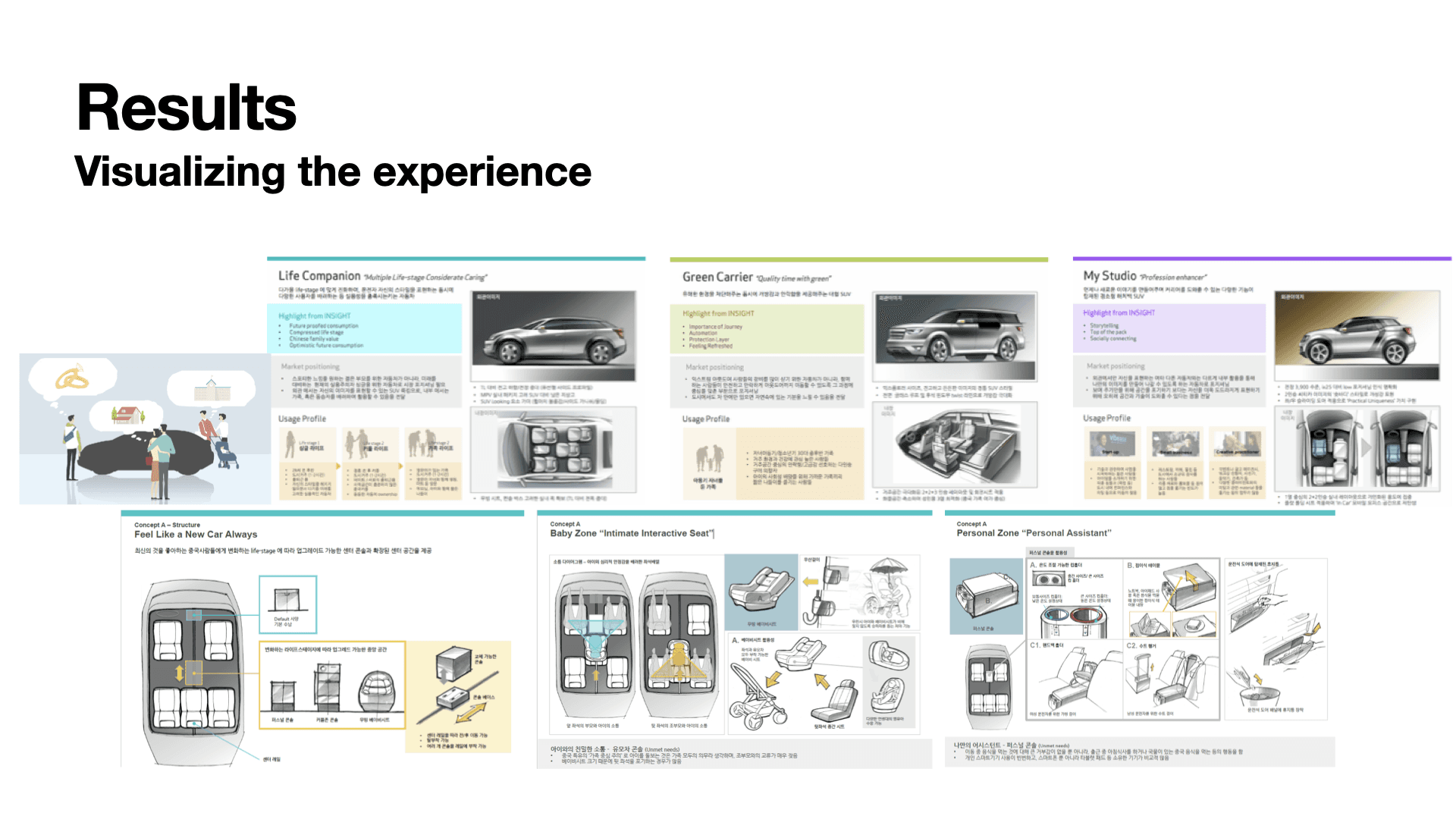
Final concepts are confidential, but I'm happy to walk through the process and outcomes in a conversation.